DIVINE LOVER
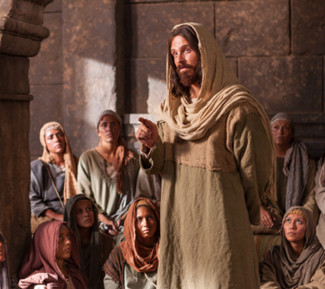
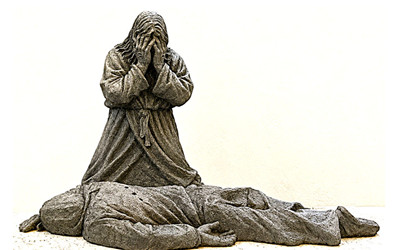
The word "lover" seems to have taken on a rather shady meaning these days, probably because of all of the cheap and superficial ways that it is used. But it would be a shame for us to lose the real significance of the word, especially when we try to understand God as being our Divine Lover.
READ MORE
|

-
Catholic voters have shifted to the right politically, yet on issues such as abortion, their views have become more liberal than they were ten years ago. Younger priests are more conservative because the generation now entering the priesthood is itself more conservative.
-
It is a curious fact that Catholic social doctrine never confers a blessing on democracy per se, as an end in itself. Instead, it is viewed as a means to other social goods. Pope Leo XIV, in his recent encyclical, detailed three of those goods: "The Church values democracy insofar as it guarantees the effective participation of citizens, enables them to elect and peacefully replace their leaders and prevents power from being monopolized by small elite groups."
-
Synodality remains a wedge issue within the church, the target of fierce and frequent attacks by conservative clerics. But after sparking tens of thousands of conversations about the life of the church held among all its members around the world, which set the stage for greater lay involvement and transparency in church governance, synodality increasingly appears here to stay.
-
The USCCB has called for strict gun control but failed to mobilize Catholics to demand it, largely leaving the fight to others. It’s past time for the bishops to intensify their efforts to convince politicians, judges, and the Catholic faithful that strict gun control is a demand of the Gospel.
-
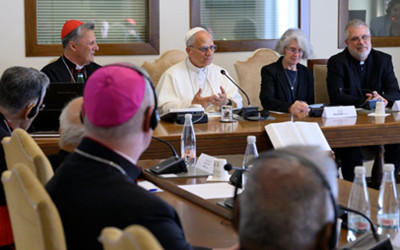
Described as “a set of considerations,” rather than a doctrinal note, the document asserts it was written to stimulate reflection in the Church and pastoral commitment regarding the transmission of the faith. The text also touches on the role of the liturgy, beauty and personal witness in passing on the faith...
-
The church will continue to ask questions and bring our moral tradition, institutions and global reach to advocate for shared responsibility. We will ask whom this is technology for, who bears its risks and who is being left behind. And, as Pope Leo has done, we will urge everyone to become engaged, because these decisions still remain ours to make.
-
Pope Leo XIV’s encyclical Magnifica Humanitas rejects the global culture of military and economic dominance, calling instead for a “civilization of love” centered on human dignity, shared responsibility, and the common good.
-
Teaching humanity how to bear the burden of a greater consciousness, how to harness psychic energy, and how to transform the energy of love so that all may be one. Adapted by Kathleen Duffy, SSJ from Teilhard’s “The Eternal Feminine”
 |