Over the last few weeks we have been reflecting on parables taught by Jesus immediately after his final entry into Jerusalem before his death. These were directed towards the religious community and leadership of Jerusalem at the time and powerfully illustrate the message of the Gospel and the consequences of failing to recognize it. Each is an easily deciphered allegory, a type of parable in which every detail is given a symbolic meaning.
The parable of the two sons is found only in Matthew's Gospel, and it repeats The Lord's demand for a conversion of heart. The second son knows the right words, but his response is hollow. The sadder-but-wiser reaction of the first son is more genuine. He repents and proves it by action. Jesus blisters his opponents by turning the parable on them. Their hearts are hard and cold, and it is the tax collectors and prostitutes (whose lives had once been a "no" to God) who now enter the kingdom.
The parable of the vineyard plays the same melody but with different words. The Lord's vineyard is tended by laborers who prove to be faithless. They reject the servants of the landowner who come to claim his harvest. Finally the landowner sends his son, the "heir." But the wicked tenants eject him from the vineyard and kill him. What will be the fate of people so blind that they kill the landowner's son? Matthew draws out the consequences in a simple verse: because Israel has not responded to Jesus and his Gospel, the kingdom is taken from their charge and offered to others, "who will produce its fruit."
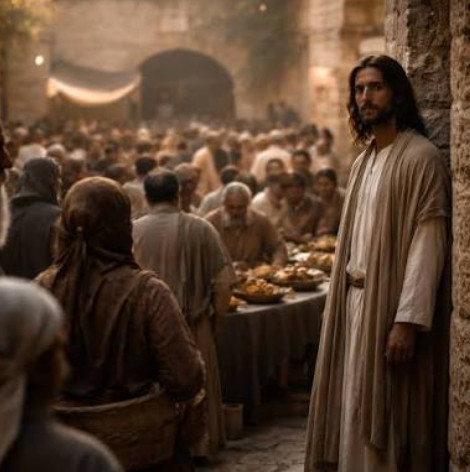
The last of the trilogy (today's parable) makes it clear that these lessons from history are meant to alert the Christian community to the consequences of failing to give Jesus full and genuine response to the Gospel. The story of the wedding banquet plays out its own sad story of refusal. The feast is all prepared, but the invited guests are unimpressed. They refuse to come, some going calmly about their usual business while others turn ugly and kill the servants who announce the feast. The king's reaction is ferocious. The invited guests are punished and their town destroyed. And now the son's wedding feast is thrown open to everyone, "bad and good alike."
So far, so good. But the story is not over. The king comes into the banquet hall and finds a guest without a wedding garment. Judgement falls on this man, too, and he is thrown outside into the darkness. The message is clear. The Gospel makes the same demand on all, invited and uninvited alike. No person or group, or group of leaders can be smug about their membership in the Christian community. The test of genuine conversion of heart and a life of loving service is applied to all. Anything less - a community without its harvest, a church without its wedding garment - will be cast into darkness.
The Christ we meet at this wedding banquet is all inclusive. The invitation is not a casual or trivial one. Everyone who comes will be treated as "guests," even those considered as outsiders. But those who get in must make a complete response that indicates they realize what has been given them.
Without a proper response to the invitation, we are no longer at a banquet but simply “out to lunch.” Without an authentic RSVP to the invitation we might just be asked: “My friend, how is it that you came in here without a wedding garment?”