For most of us, our image of a vineyard is limited to an occasional travel show on television, or maybe a wine-tasting tour at a local winery, or simply just a well-produced article from a current gourmet food and wine magazine. But we can all relate to the work of a gardener, even if be that of a small home garden. So it shouldn't take a stretch of our imaginations to consider what both the parables of Isaiah and Jesus mean for us.
Broadening the scope a little, we can also carry the idea of God being "Our God" a little too far. We human beings are a strange species, and we need to be constantly reminded that God does not belong to any one group of us, that we all belong to Him (we are His) and that He has given us His gifts, not to possess, but to use wisely.
Both the First Reading and today’s Gospel focus on the Kingdom of God and those who claim to possess it. Both use parables about a vineyard, and both parables end in violence.
Isaiah speaks of the owner of a vineyard who takes great care in preparing it for a plentiful harvest. But when the time came for the harvest the grapes were sour and could not be used for wine. The owner responds by tearing down the vineyard because it did not bear fruit. Isaiah raised his prophetic voice to warn the people of Israel that if they did not tend the vineyard of the Lord more carefully they would bring forth sour grapes and ultimately lose their inheritance.
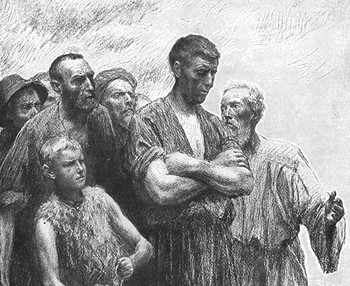
Jesus also talks about a vineyard. God, as usual, is the owner of the vineyard. The vineyard is a violent world in which the tenants continually beat and kill one another - including the owner's son. In fact, the violence of the tenants leads to corresponding violence from the owner, who kills the tenants. By the end of the parable everyone has been harmed, and the vineyard is destroyed.
The details of the two parables are different, but it is the same story. They are both about God punishing those who fail to produce. Right?
Actually, the two parables are not the same. There is much more going on in the Gospel. Perhaps hidden in the story is the truth about what God has done for us. God has sent his son into our world to end the violence of the vineyard. And he does this not by more violence but by non-violence, not by striking back but by handing over his life, not by compounding violence but by absorbing it.
If we look carefully, we can see that we are learning something about God that we all need to hear. God doesn't give up on us, even when we have turned away. He is even willing to risk looking foolish in our eyes, willing to come again and again to us. We must continually ask ourselves the questions posed by these parables. Where is our place in the vineyard? And, after all He has done for us, what fruits will God find at harvest time? How can we help one another realize the good fruits of the harvest? The answers to these questions begin only with a clearer understanding that true ownership is nothing more than being faithful stewards of the tasks given us by the Lord.
There is a lot of work to do in our world to make it reflect God’s will and desire for us. Today’s parables invite us to stay with the task, knowing that this work isn’t ours alone to complete.
[Image: The Wicked Vinedressers by Eugène Burnand]